Hydration is one of those areas of sports nutrition where “more” isn’t necessarily better and ‘I feel fine’ doesn’t automatically mean there’s nothing to improve—and there is no one-size-fits-all formula.
After working with more and more endurance athletes, particularly ultra-distance runners and cyclists, I’ve seen just how different athletes can be when it comes to sweat and sodium losses. That’s why we’re excited to offer in-person sweat testing through Kristen Arnold and Team in Fort Collins, Colorado.
The goal is simple: help athletes understand how much fluid and sodium they actually lose during exercise so they can build a more individualized hydration strategy.
How much do athletes really sweat?
The differences between athletes can be significant.
I’ve worked with athletes who lose nearly 3 liters of sweat and over 5,000 mg of sodium per hour, while others may lose less than 0.5 liters of fluid and 200 mg of sodium per hour.
Those are dramatically different starting points for developing a hydration plan.
If you’re a heavy sweater, a salty sweater, regularly train or race for several hours, or spend significant time exercising in the heat, understanding your individual losses can be particularly valuable. But sweat testing can provide useful information for athletes across the spectrum.
What does sweat testing measure?
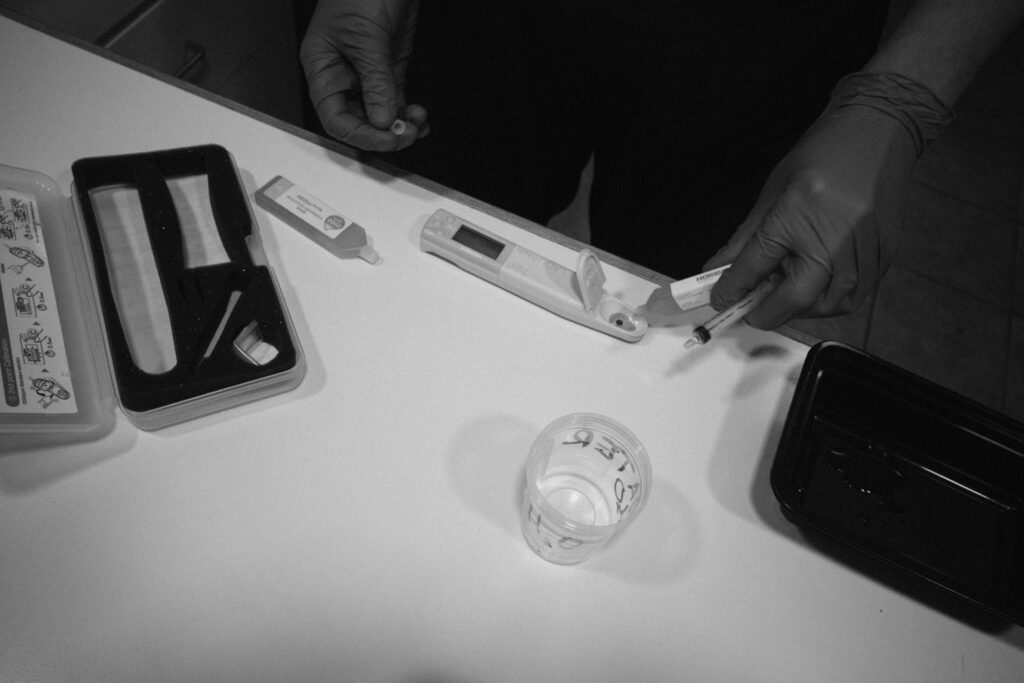
Our sweat testing service measures two important variables:
- Sweat rate: How much fluid you lose during exercise, reported in ounces or milliliters per hour.
- Sweat sodium concentration: How much sodium is present in your sweat, reported as milligrams per liter.
Together, these measurements provide a much clearer picture of your individual fluid and sodium losses than relying on generic hydration recommendations alone.
Why do we only measure sodium and not other minerals like magnesium or potassium in sweat?
Compared to sodium, the other minerals present in sweat (magnesium, potassium, calcium, etc) are in trace amounts. Research shows intentionally replacing these compounds through strategies other than normal eating patterns does not contribute to performance or health benefits. For example, where an athlete can lose between 300-2,000mg sodium per liter of sweat, they will lose 3-4mg magnesium per liter of sweat. (1)
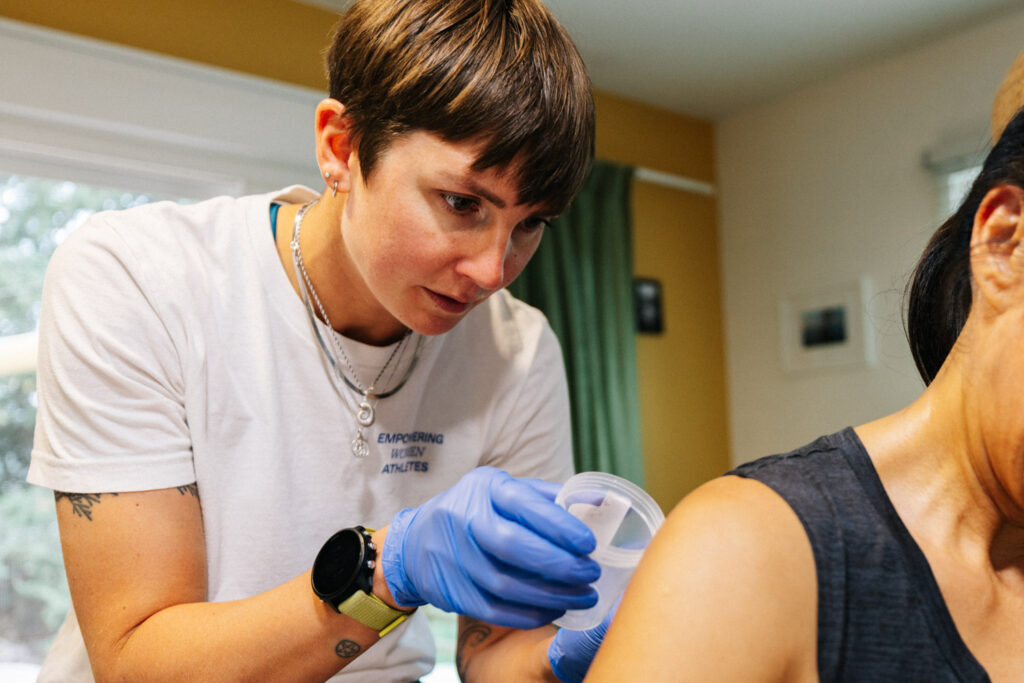
The testing involves a 1–2 hour moderate-to-hard bike ride or run. We collect sweat samples using patches placed on the skin and measure sodium concentration with a validated field-testing method. We also measure sweat volume by accounting for changes in body weight along with the food and fluids consumed during the workout. Our testing methods are based on best practices from the Gatorade Sports Science Institute.
What do you do with the results?
The numbers are only useful if you know how to apply them.
Following your test, you’ll receive a detailed report and personalized guidebook that takes your sweat testing results into consideration along with your sport, training and racing demands, preferred sports nutrition products, and other relevant factors.
The goal isn’t necessarily to replace every ounce of fluid or milligram of sodium you lose. Rather, your results give us individualized information that can help guide a practical hydration strategy for training and competition.
This can be especially helpful when athletes experience issues such as headaches, dizziness, gastrointestinal distress, bloating, feeling unusually flat, or difficulty maintaining performance during long or hot sessions. Hydration isn’t always the explanation for these symptoms, but it is an important piece of the puzzle that is often underestimated or overlooked.
Establish your baseline now
Another benefit of testing outside of the summer heat is that it can establish a baseline.
Your sweat rate and sodium concentration can change with environmental conditions and heat acclimation, so one test won’t predict exactly what will happen during every workout. However, having individualized baseline data is far more useful than having no data at all—and it gives us a starting point for adjusting your strategy as conditions change. Repeat testing may also be appropriate when training demands or environmental conditions change significantly, particularly as it relates to heat acclimation. As you train and live in the heat, your body adapts by increasing your sweat rate (the amount you sweat) and decreasing your sodium concentration (less sodium losses per liter). Retesting in a variety of conditions can help us develop a ‘Sweat Portfolio’ which we can apply to a variety of training/racing conditions.
Sweat testing in Fort Collins
Sweat testing is available in person from our Old Town Fort Collins office, with off-site testing available for an additional fee. Indoor cycling options are also available when needed.
Know your sweat. Fuel your performance.
Current pricing is $199 through January 2027 (regularly $275), with group rates available.
If you’ve ever wondered whether you’re drinking enough—or too much—or how much sodium you actually need during long training sessions and races, sweat testing can give you data to help answer those questions.